
Dental Implants in Campbelltown: Cost Factors and What to Expect

Losing a tooth changes more than your smile. It affects how you eat, how you speak, and, over time, the structure of your jaw. For many people in Campbelltown, dental implants have become the preferred long-term solution — not because they’re the easiest option, but because they’re the most complete one.
This guide covers everything you need to know: how implants work, whether you’re a candidate, what the process involves, and the factors that influence cost.
What Are Dental Implants?
A titanium post is surgically inserted to serve as a substitute tooth root in the jawbone. Once it fuses with the bone through osseointegration, a custom crown is attached to restore natural appearance and function.
The full structure has three components:
- The implant — a small titanium screw that fuses with the jawbone
- The abutment — an above-the-gum line connecting piece
- The crown — the visible, tooth-shaped restoration attached to the abutment
Unlike other tooth replacement options, implants address both the visible gap and the underlying bone. Because the titanium post acts as a tooth root, it stimulates the jawbone the same way a natural tooth would, helping to preserve facial structure over time.
Implants are considered a permanent tooth replacement. With proper care, they are designed to last for many years and do not require the ongoing adjustments required by removable options.
Am I a Candidate for Dental Implants?
Not everyone is immediately suitable for implants, but many people who assume they’re not are actually good candidates after a thorough assessment. Here’s what we look at:
Bone density and volume
The implant needs sufficient jawbone to anchor securely. If bone loss has occurred — often from a long-standing missing tooth or gum disease — a bone graft may be required before implant placement. This is common and doesn’t automatically disqualify you.
Gum health
Before implant surgery, active gum disease needs to be treated. Healthy gum tissue is essential for both healing and long-term implant stability.
General health
Your healing response can be affected by certain medical conditions and medicines. Uncontrolled diabetes or autoimmune disorders may influence treatment suitability or require extra planning.
Smoking
Smoking affects the healing process and raises the likelihood of implant failure. If you smoke, this will be part of the conversation during your assessment. Some patients choose to quit or reduce smoking ahead of treatment.
Age
Implants are typically recommended for adults once jaw growth is complete. There is no upper age limit.
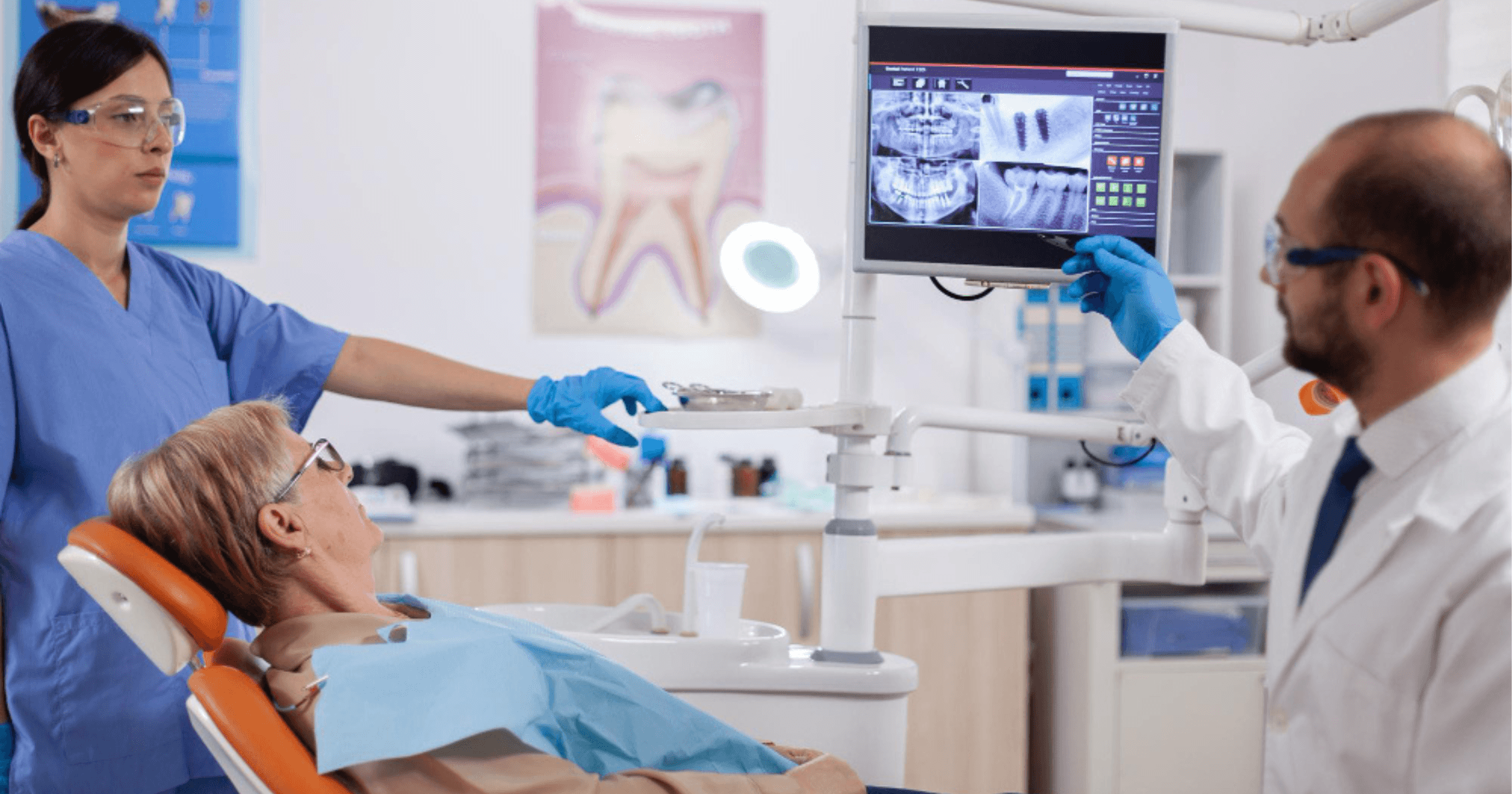
The only way to know for certain whether you’re a candidate is through a proper clinical assessment, including X-rays and a review of your dental and medical history. We don’t make assumptions — we evaluate each person individually.
The Dental Implant Process
Implant treatment is completed in stages over several months. The timeline depends on your individual situation — how much preparatory work is involved, how long healing takes, and when your jawbone is ready for the final restoration.
In general, the process moves from initial assessment and any preparatory treatment (such as bone grafting), through to implant placement, an osseointegration healing period, and finally the fitting of your permanent crown.
For a full breakdown of each stage, read our guide: Dental Implant Procedure: How Is It Done?
What Affects the Cost of Dental Implants?
The total cost of dental implant treatment varies from case to case. We don’t publish set prices because treatment is not one-size-fits-all — several factors influence what’s involved and therefore what it costs.
Number of implants
Single-tooth replacement is a different scope of treatment from multiple implants or a full-arch restoration. The total cost increases with each additional implant.
Need for bone grafting.
If your jawbone doesn’t have sufficient volume to support an implant, bone grafting is required first. This is an additional procedure with its own associated costs.
Materials used
The type of crown material — porcelain, zirconia, or porcelain-fused-to-metal — affects pricing. Your Campbelltown dentist will discuss the most suitable option for your specific tooth position and bite requirements.
Complexity of your case
Straightforward single-tooth replacements in patients with good bone density are simpler than cases involving multiple missing teeth, significant bone loss, or underlying health factors.
Health fund cover
Some private health funds provide partial cover for implant-related procedures under major dental. The level of cover depends on your policy and your fund. We recommend checking directly with your fund before treatment begins.
We’re transparent about costs from the start. At your consultation, you’ll receive a detailed treatment plan with itemised fees, so you know exactly what’s involved before committing.
Dental Implants vs. Alternatives
Implants aren’t the only way to replace a missing tooth, but they are the most structurally complete option. Here’s how they compare:
Dental bridges
A bridge fills a gap by anchoring to the teeth on either side, which need to be prepared (and permanently altered) to support the restoration. Bridges don’t address bone loss underneath the gap. They usually last between 10 and 15 years before requiring replacement.
Dentures
Full or partial dentures are removable and can replace multiple teeth. They’re generally more affordable upfront, but can shift during eating or speaking and require regular maintenance.
Over time, the jawbone beneath a denture continues to shrink because there’s no root replacement to stimulate it.
Dental implants
Unlike other options, implants are independent of adjacent teeth and support jawbone health while acting like natural teeth. The upfront cost is higher, but the long-term stability and function often make them the more cost-effective solution over time.
The right choice depends on your clinical situation, your priorities, and your budget. We’ll present all suitable options and help you make an informed decision — not pressure you toward the most expensive one.
Frequently Asked Questions
How long do dental implants last?
Good oral hygiene and regular check-ups help ensure implants last many years. While the crown may eventually need replacement due to wear, the implant is intended to be durable for the long term.
Is the implant procedure painful?
The surgery is performed under local anaesthetic, so discomfort during the procedure is minimal. Most patients report that the recovery is more manageable than they expected — some soreness, swelling, and tenderness for a few days is typical.
Can I get financing for dental implants?
We offer payment plan options through third-party providers to help spread the cost of treatment. Speak to our team about what’s available at your consultation.
What happens to the jawbone after a tooth is lost?
If the tooth root is no longer present, the jawbone in that area can gradually start to shrink. This is why early replacement matters — the longer a tooth has been missing, the more bone may have been lost, which can affect implant suitability and may require grafting.
What is the success rate of dental implants?
Implants have a well-documented track record in dentistry. Outcomes depend on individual factors, including bone health, oral hygiene, and general health. Your Campbelltown dentist will discuss what’s realistic for your situation based on your assessment.
Dental Implants in Campbelltown
If you’ve been living with a missing tooth and want to understand your options properly, a consultation is the right starting point. At A Plus Dental, we see patients from across Campbelltown and the surrounding areas, including Ingleburn, Leumeah, Minto, and Macquarie Fields.
Call us on (02) 4627 3833 or book online to arrange your appointment. Grab your FREE Dental implants consultation today!
We’re located at Suite 3/300 Queen Street, Campbelltown.