
Tongue Scraper: Does Tongue Scraping Help Bad Breath?
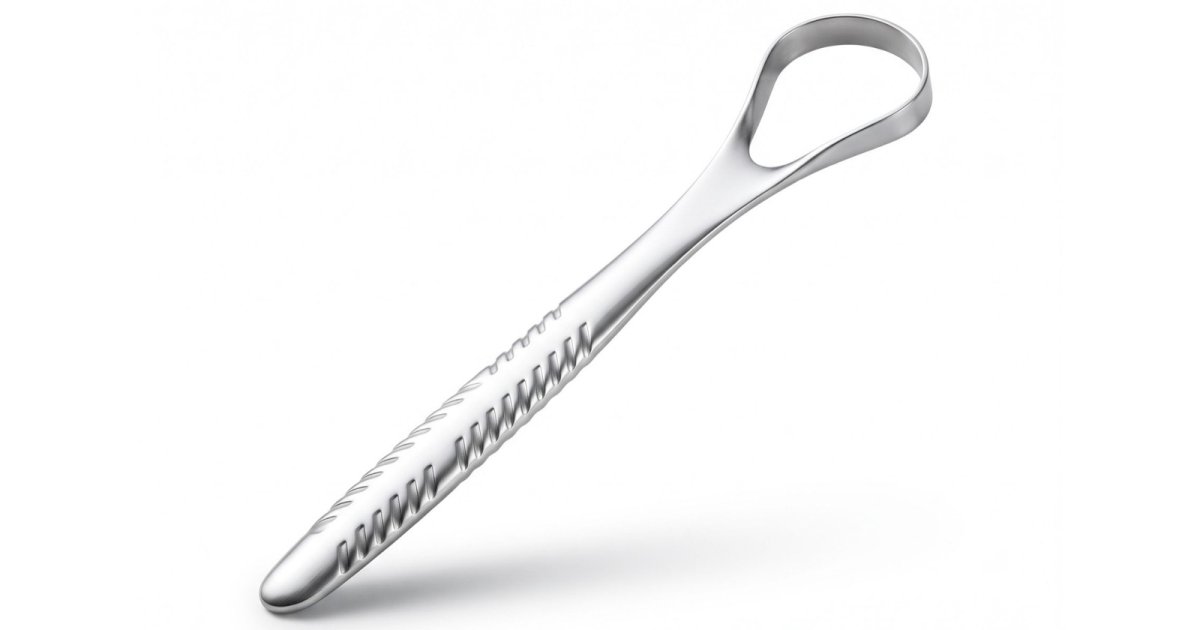
A tongue scraper is a small tool for cleaning the surface of your tongue, and it’s often suggested for bad breath. It may help a little, but it isn’t a fix on its own.
This guide explains what the evidence says, how to use a tongue scraper, how metal and copper scrapers compare, and when bad breath needs a dentist. It’s general information, not a diagnosis.
Why the Tongue Matters for Bad Breath
Your tongue is covered in tiny bumps called papillae. They can trap bacteria, food debris and dead cells. Most of those bacteria are harmless, but some can contribute to bad breath, so cleaning the tongue is part of caring for your mouth.
The tongue isn’t the only source. Gum disease, tooth decay and dry mouth can all play a part, which is why scraping works best alongside the rest of your oral care.
Does Tongue Scraping Help Bad Breath?
A Cochrane review found that tongue scrapers were slightly more effective than a toothbrush at reducing the compounds that cause bad breath. The review described the evidence as weak, and the effect as short-lived.
So a tongue scraper may help, but only for a while. It also doesn’t replace brushing your teeth and cleaning between them, and it doesn’t treat gum disease or decay. If bad breath keeps coming back, it’s worth a check-up. Our bad breath treatment page and our guide to bad breath explain more.
Types of Tongue Scrapers
Tongue scrapers come in a few materials, and the right one is mostly a matter of what you’ll use comfortably.
Metal tongue scraper
A metal tongue scraper is usually made of stainless steel. It’s a thin, curved or U-shaped tool that you pull across the tongue.
Copper tongue scraper
A copper tongue scraper looks similar to a stainless steel one. Copper can tarnish, so it needs rinsing and drying after each use.
Plastic and silicone scrapers
These are also common. They’re softer, which some patients prefer.
Whichever you choose, look for a smooth, rounded edge. If it gets chipped, bent or rough, replace it. If you know you’re sensitive to a particular metal, check before you buy.
How to Use a Tongue Scraper
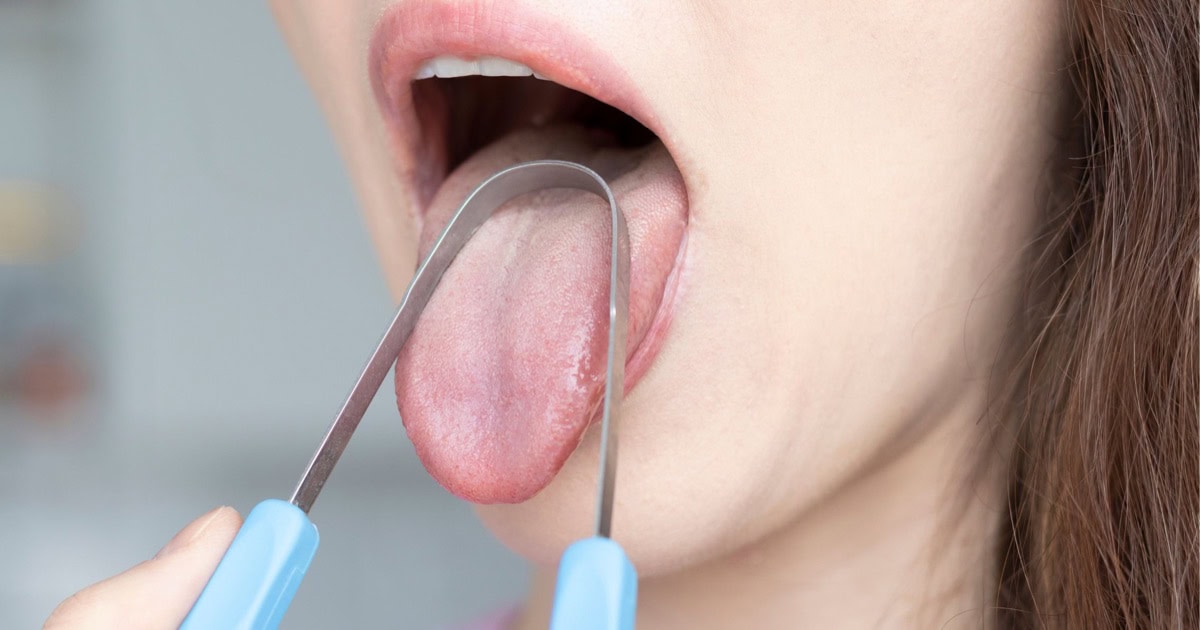
Add it as the last step of your brushing routine.
- Brush and clean between your teeth as usual, then rinse.
- Stick your tongue out and place the scraper as far back as is comfortable. Going too far back can make you gag.
- Press lightly and pull the scraper forward towards the tip of your tongue.
- Repeat once or twice across the surface.
- Rinse the scraper in warm water after each pass.
- Finish by rinsing the scraper and swishing your mouth with water.
It shouldn’t hurt or damage your tongue. If it does, you’re pressing too hard, so use less pressure.
Who Should Take Care or Ask First
- If your tongue has sores or ulcers, don’t scrape over them, and have them looked at.
- If your tongue shows white, black or red patches, or has sores or pain that last more than two weeks, see your dentist.
- If you have a heart valve condition or have had endocarditis, ask your doctor before using a tongue scraper. A published case report linked a tongue scraper to a heart infection in a person with a damaged heart valve.
- If scraping makes your tongue bleed, stop and ask your dentist.
When Bad Breath Needs a Dentist
See a dentist if:
- Bad breath keeps coming back despite good cleaning.
- Your gums bleed or look swollen.
- You have a bad taste, a dry mouth, or a sore tooth.
- You haven’t had a check-up for a while
If your dentist finds nothing dental, they may suggest seeing your GP.
Frequently Asked Questions
Is a tongue scraper better than a toothbrush?
Slightly, according to the Cochrane review, but the evidence is weak. A gentle brush of the tongue is also an option, so use whichever you’ll do regularly.
Is a metal or copper tongue scraper better?
No material has been shown to clean better than another. Choose one with a smooth, rounded edge that’s comfortable for you.
Can a tongue scraper cure bad breath?
No. It may reduce bad breath for a short time, but it doesn’t treat causes such as gum disease or decay.
Can I scrape my tongue too hard?
Yes. Use light pressure. It shouldn’t hurt, and if it does, ease off.
Do I need a tongue scraper?
No. It’s an optional extra, and brushing your tongue gently is an alternative.
Book a Check-up in Campbelltown
If bad breath keeps coming back, a check-up is the next step. Your dentist can look at your teeth, gums and tongue, explain what they find, and talk through what might help.
At A Plus Dental, we see patients from Campbelltown and the surrounding suburbs.
Call us on (02) 4627 3833 or book online. You’ll find us at Suite 3/300 Queen Street, Campbelltown NSW 2560.
Sources: Cleveland Clinic. “Does Tongue Scraping Actually Work, and Should I Be Doing It?” health.clevelandclinic.org (11 June 2021). Outhouse TL, Al-Alawi R, Fedorowicz Z, Keenan JV. “Tongue scraping for treating halitosis.” Cochrane Database of Systematic Reviews, 2006 (CD005519). Redmond AM, et al. “Endocarditis after Use of Tongue Scraper.” Emerging Infectious Diseases, 2007;13(9):1440–1441.
Any surgical or invasive procedure carries risks. Before proceeding, consider seeking a second opinion from an appropriately qualified health practitioner.